Stefan Marinov
Bulgarian physicist who fell to his death from a university library staircase in Graz, Austria in 1997 while researching antigravity and free energy devices, officially ruled a suicide.
| Field | Details |
|---|---|
| Full Name | Stefan Marinov |
| Born | February 1, 1931 |
| Died | July 15, 1997 |
| Age at Death | 66 |
| Location of Death | University of Graz, Graz, Austria |
| Cause of Death | Fall from university library staircase |
| Official Ruling | Suicide |
| Category | Physicist / Free Energy Researcher |
Assessment: SUSPICIOUS
Marinov's death has unusual features that distinguish it from a typical suicide. A student witness reported that Marinov was standing backwards on the staircase, leaning back progressively until he fell — without uttering a cry. This description is inconsistent with both a deliberate suicide (most jumpers face forward) and an accidental fall (which would typically produce a startled reaction). Marinov was actively working on antigravity and free energy research at the time of his death, and he had recently self-published experimental results. While he reportedly left letters before his death (suggesting premeditation), some sources indicate irregularities in the official investigation. Marinov is one of several physicists researching unconventional energy or propulsion who died under suspicious circumstances during the 1990s.
Circumstances of Death
On July 15, 1997, Stefan Marinov fell to his death from a staircase at a library at the University of Graz in Austria. He was 66 years old.
A student who witnessed the event reported that Marinov was standing backwards on the staircase, leaning back so far until he fell down — without a cry. The official ruling was suicide, and Marinov reportedly left letters before his death.
However, some sources reported irregularities in the official investigation. The witness description of the fall — backwards, without a sound — struck some observers as inconsistent with a deliberate suicide or a simple accident.
Background
Stefan Marinov was born on February 1, 1931, in Sofia, Bulgaria. He studied physics at the University of Prague and Sofia University, and served as an Assistant Professor of Physics at Sofia University from 1960 to 1974.
Scientific Work
Marinov was a controversial figure in physics. He promoted theoretical viewpoints that challenged Einstein's theory of relativity and devoted much of his later career to:
- Anti-relativistic physics — He published extensively on what he saw as flaws in special and general relativity
- Perpetual motion and free energy — He attempted to construct devices that would generate energy from unconventional sources
- Antigravity research — He explored theories and experiments related to gravitational manipulation
Marinov published and self-published prolifically, including in his own journal Deutsche Physik. While mainstream physicists largely dismissed his theoretical claims, he was persistent and energetic in his research.
1997 — Final Research
In 1997, shortly before his death, Marinov self-published experimental results that he acknowledged confirmed classical electromagnetism and disproved that a machine he had constructed could serve as a source of perpetual motion. This admission — that his own experiments had falsified his most ambitious claims — may have contributed to a state of despair, lending some credibility to the suicide ruling.
Family
Marinov was survived by his son, Marin Marinov, who at the time of his father's death was a vice-Minister of Industry of Bulgaria.
Why This Death Possibly Raises Questions
- The witness description — standing backwards, leaning back until falling without a cry — is unusual for either suicide or accident
- Marinov was actively researching antigravity and free energy at the time of his death
- He is one of several physicists working on unconventional energy/propulsion who died under suspicious circumstances in the 1990s, alongside Eugene Mallove (murdered 2004, cold fusion researcher) and others
- Some sources report irregularities in the official investigation
- The manner of death — falling from a building — appears in multiple cases of researchers working on classified or sensitive physics topics
- However, Marinov had recently published results that disproved his own most ambitious experimental claims, which could have triggered suicidal despair
- He reportedly left letters before his death, consistent with planned suicide
- His anti-relativistic views placed him outside mainstream physics, and professional isolation can contribute to depression
- The suicide ruling is not implausible given the totality of circumstances
See Also
- Stefan Marinov (Zero Point Energy) — This case also appears in the Zero Point Energy project
- Bruce DePalma — N-Machine inventor who died before scheduled testing in New Zealand
- Floyd Sweet — Free energy inventor who received death threats and died under suspicious circumstances
- Eugene Mallove — Cold fusion advocate beaten to death in 2004
- Stanley Meyer — Water fuel cell inventor who died suddenly in 1998
- Thomas Townsend Brown — Electrogravitics researcher
Other Shocking Stories
- George Adamski: The most famous 1950s UFO contactee who claimed meetings with extraterrestrial "Space Brothers."
- Tim Burchett: U.S. Congressman from Tennessee who leads Congressional UAP hearings and has publicly stated he was warned by Army...
- George Knapp: Award-winning investigative journalist who broke the Bob Lazar / Area 51 story in 1989, has spent over 35...
- Fred Bell: Nuclear physicist, claimed MKULTRA participant, and inventor who died on September 25, 2011 — reportedly within 48 hours...
Sources
- Stefan Marinov — Wikipedia
- Stefan Marinov — Natural Philosophy Wiki
- Update on Stefan Marinov's Death — Scribd
- Update on Stefan Marinov's Death — Padrak
- Stefan Marinov In Memoriam — Padrak/INE
- Harassment and Premature Deaths 1989-2004 — Perpetual Motion in the 21st Century
This information was built by Grok and Claude AI research.
Status: Deceased (1997)
Additional context from the UAP Energy Systems Murders investigation
Bulgarian physicist working on perpetual motion and unconventional electromagnetic theories, fell from the staircase of the University of Graz library in Austria under disputed circumstances.
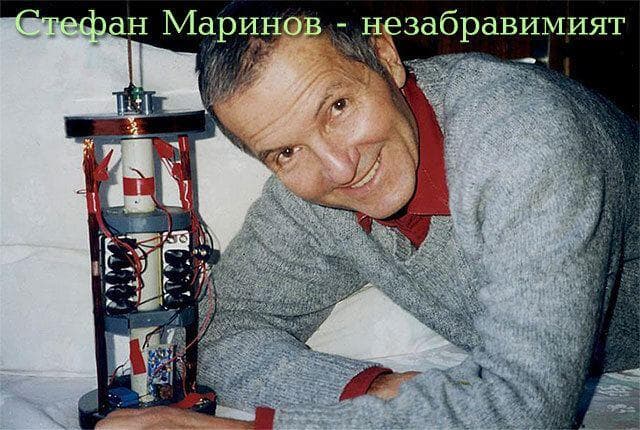
| Field | Details |
|---|---|
| Full Name | Stefan Marinov |
| Born | February 1, 1931 |
| Died | July 15, 1997 |
| Age at Death | 66 |
| Location of Death | University of Graz, Graz, Austria |
| Cause of Death | Fall from external emergency staircase of library building |
| Official Ruling | Suicide |
| Category | Physicist / Scientist |
Assessment: SUSPICIOUS
Stefan Marinov's death was officially ruled a suicide — police stated he jumped from the external emergency staircase of the University of Graz library. Suicide notes were reportedly found. However, several circumstances raise questions: there was no news release about his death; despite Marinov leaving letters requesting that specific people be immediately notified, police did not act on these requests; his son Marin Marinov — who was Deputy Minister of Industry of Bulgaria at the time — was not informed for at least two weeks; and Russian quantum physicist Lev Sapogin, who knew Marinov and was planning to visit him, claimed that Marinov "was thrown out of the window by unknown people."
Circumstances of Death
On July 15, 1997, Stefan Marinov died after falling from the external emergency staircase of the library building (Bibliotheque) of the University of Graz in Austria. Police concluded he had killed himself by jumping.
Several letters were reportedly found at the scene, apparently signed by Marinov, requesting that certain people be immediately notified of his death. However, the police did not act on these requests.
Delayed Notification
Marinov's son, Marin Marinov, was at the time the Deputy Minister of Industry of Bulgaria. Despite his prominence and despite Marinov's written requests for notification, Marin was not officially informed of his father's death for at least two weeks. The first notification came informally from Panos Pappas, a friend and fellow physicist, who contacted Marin Marinov in Sofia on July 31, 1997 — sixteen days after the death.
No News Release
There was no public news release about Marinov's death. For a physicist who had been a controversial but publicly active figure — publishing his own journal, writing to major physics publications, and corresponding with scientists worldwide — the absence of any official announcement was unusual.
Background
Scientific Work
Stefan Marinov was a Bulgarian-born physicist, researcher, writer, and lecturer who spent much of his career challenging mainstream physics. His key areas of work included:
- Anti-relativistic experiments: Marinov claimed to have experimentally disproved aspects of Einstein's theory of special relativity. Using arrangements of coupled mirrors and coupled shutters, he reported in 1974 that he had measured an anisotropy in the velocity of light — a result that, if valid, would contradict a foundational assumption of relativity.
- Perpetual motion research: Later in his career, Marinov openly promoted the possibility of perpetual motion machines and free energy devices, positions that placed him firmly outside mainstream physics.
- Deutsche Physik journal: Marinov self-published a journal called Deutsche Physik, through which he disseminated his experimental results and theoretical arguments.
- The Siberian Coliu: In the last issue of Deutsche Physik (Issue 21, 1997), Marinov published experimental results that actually disproved his own perpetual motion claims — specifically, that a machine he had constructed called the "Siberian Coliu" did not function as a perpetual motion device.
Possible Motive for Suicide
According to Wikipedia, Marinov was "devastated by the negative results" of his own experiments disproving the Siberian Coliu as a perpetual motion machine. This has been cited as a possible motive for suicide — that his life's work on unconventional physics had been contradicted by his own experiments.
Possible Motive for Murder
Marinov's supporters point out that even if some of his claims were wrong, he had been actively challenging powerful scientific institutions for decades and had been working on electromagnetic devices that, if functional, could threaten the energy establishment. His unconventional experiments and persistent public challenges to mainstream physics made him enemies in the scientific community.
Why This Death Possibly Raises Questions
- Lev Sapogin's claim: Russian quantum physicist Lev Sapogin, who personally knew Marinov and was planning to visit him in Austria, stated unequivocally that Marinov "was thrown out of the window by unknown people"
- No news release: The complete absence of any public announcement about the death of a publicly active and internationally known physicist is unusual
- Police ignored notification requests: Despite Marinov leaving explicit written requests for specific people to be notified, police did not follow through on these requests
- Son not notified for two weeks: Marin Marinov, Deputy Minister of Industry of Bulgaria, was not informed of his father's death for sixteen days — and then only informally through a friend, not through official channels
- Suicide notes versus the claim of defenestration: The presence of suicide notes could indicate genuine suicide, or could have been planted to cover a murder staged as suicide
- Timing with negative results: While the publication of negative experimental results is cited as a motive for suicide, some have questioned whether someone devastated enough to kill himself would simultaneously leave careful letters requesting specific notifications
The Counterargument
- Suicide notes were found at the scene, reportedly in Marinov's handwriting
- Marinov had just published results disproving his own perpetual motion device, which could have caused genuine despair
- Marinov's scientific claims were largely rejected by mainstream physics, and his career had been characterized by frustration and marginalization
- Lev Sapogin's claim of murder is a secondhand assertion without presented physical evidence
- The police failure to notify his son could reflect bureaucratic incompetence rather than conspiracy
See Also
- Eugene Mallove — Cold fusion advocate beaten to death
- Arie DeGeus — Clean energy inventor who died of heart failure
- Stanley Meyer — Water fuel cell inventor who died suddenly
- Bruce DePalma — N-Machine inventor who died weeks before testing
- Stefan Marinov (UAP Deaths project) — Parallel profile in UAP Deaths project
Other Shocking Stories
- John Bedini: Died suddenly — four hours after his brother also died. Free energy inventor. He was 67.
- John Kanzius: Discovered radio waves could split salt water into hydrogen fuel. Died before commercializing.
- Jaime Gustitus: Top Secret/SCI cleared AFRL analyst at Wright-Patterson. Found dead at 28. No public cause given.
- Floyd Sweet: Told by phone: "It is not nice to fool Mother Nature." His device went silent after.
Sources
- Stefan Marinov — Wikipedia
- Stefan Marinov — Natural Philosophy Wiki
- Stefan Marinov — In Memoriam (Last Will and Testament) — Padrak.com
- Update on Stefan Marinov's Death — Emails from Panos Pappas
- Perpetual Motion in the 21st Century: Harassment and Premature Deaths 1989–2004
- Stefan Marinov — Alchetron
This information was built by Grok and Claude AI research.
Status: Deceased (1997)
Additional context from the UAP Physics Murders investigation
Bulgarian physicist who challenged Einstein's relativity and pursued experimental antigravity and free energy devices, claiming anomalous electromagnetic effects that conventional physics could not explain.
| Field | Details |
|---|---|
| Full Name | Stefan Marinov |
| Role | Physicist / Free Energy Researcher |
| Platform | Self-published journal Deutsche Physik, academic lectures, experimental demonstrations |
| Notable Works | The Marinov Motor, Deutsche Physik journal (1993-1997), anti-relativistic experimental programs, perpetual motion device research |
Their Claims
Stefan Marinov devoted much of his career to challenging the foundations of modern physics — specifically Einstein's special and general relativity — and to constructing devices that he claimed demonstrated anomalous electromagnetic and gravitational effects. His work is relevant to UAP physics because it explored precisely the territory that classified physics programs allegedly occupy: the intersection of electromagnetism and gravity, and the possibility of extracting energy from the vacuum or from unconventional electromagnetic configurations.
Marinov studied physics at the University of Prague and Sofia University and served as Assistant Professor of Physics at Sofia University from 1960 to 1974. He later relocated to Graz, Austria, where he continued his independent research until his death in 1997.
The Marinov Motor
Marinov's most significant contribution to unconventional physics was the Marinov Motor — an electromagnetic device that he claimed generated torque through mechanisms not accounted for in classical electrodynamics. The motor was designed to exploit what Marinov believed were overlooked aspects of electromagnetic interaction, specifically asymmetric forces in current-carrying conductors. Independent investigators, including Patrick Bailey, confirmed anomalous motion under specific conditions, though mainstream physicists attributed the effects to conventional explanations. Jeff Kooistra later developed derivative designs exploring the motor's overunity claims.
The Marinov Motor is relevant to UAP propulsion research because it represents an attempt to demonstrate that electromagnetic systems can produce net thrust without conventional reaction mass — a capability observed in UAP flight characteristics.
Anti-Relativistic Physics
Marinov published extensively on what he considered flaws in special and general relativity. He conducted experiments that he claimed demonstrated absolute motion detection — contradicting the core premise of special relativity that no experiment can detect absolute motion. While mainstream physicists rejected these claims, Marinov's work parallels other researchers in UAP physics who argue that relativity is incomplete and that a more complete theory would enable gravity manipulation and exotic propulsion.
Free Energy and Perpetual Motion Research
Marinov pursued the construction of devices intended to generate energy from unconventional sources, including what he described as vacuum energy extraction. He published results in his self-edited journal Deutsche Physik (1993-1997). In 1997, shortly before his death, he self-published experimental results that he acknowledged confirmed classical electromagnetism and disproved that his most ambitious perpetual motion device worked as he had hoped. This honest admission of negative results is notable — it demonstrates that Marinov, despite his unconventional views, applied experimental rigor to his own claims.
Key Quotes
Marinov's experimental results, while controversial, confirmed anomalous motion under specific conditions that warranted further investigation. — Patrick Bailey, independent investigator, on the Marinov Motor
Key Arguments & Evidence They Cite
- The Marinov Motor produced anomalous torque confirmed by independent observers under specific experimental conditions
- Marinov conducted experiments he claimed detected absolute motion, challenging special relativity's core postulate
- He argued that conventional electromagnetic theory was incomplete and that overlooked electromagnetic effects could provide new energy sources
- His work on vacuum energy extraction parallels the zero-point energy research conducted by Hal Puthoff and others in the UAP physics community
- The Marinov Motor's principle of electromagnetic thrust without reaction mass relates directly to UAP propulsion characteristics
Where They've Said It
- Deutsche Physik journal, issues published 1993-1997, covering anti-relativistic experiments and device demonstrations
- Lectures and demonstrations at the University of Graz and at alternative physics conferences throughout Europe
- Self-published experimental papers documenting both positive and negative results from his motor and energy device experiments
- Natural Philosophy Wiki documentation of his experimental work and theoretical framework
The Counterargument
- Mainstream physicists dismissed Marinov's anti-relativistic claims, noting that special and general relativity have been confirmed by thousands of independent experiments
- The anomalous effects observed in the Marinov Motor have been attributed to experimental artifacts, thermal effects, or incomplete accounting of conventional forces
- Marinov's own 1997 experiments confirmed that his most ambitious perpetual motion claims were incorrect
- His self-published journal Deutsche Physik lacked peer review, and his work was not published in mainstream physics journals
- Some critics noted that Marinov's theoretical framework was internally inconsistent and did not produce testable predictions beyond his specific devices
Related Perspectives
- Hal Puthoff — Both researchers investigated zero-point energy and unconventional electromagnetic phenomena, though Puthoff worked within the classified research establishment
- Bob Lazar — Lazar's claims about gravity amplification through electromagnetic means parallel Marinov's work on the electromagnetic-gravitational connection
- Salvatore Pais — The Navy's exotic physics patents describe electromagnetic propulsion concepts related to Marinov's motor research
- Stefan Marinov (UAP Deaths) — Profile documenting the suspicious circumstances of Marinov's death in 1997
See Also
- Zero Point Energy — The broader thesis of vacuum energy extraction that Marinov's work investigated
- Electromagnetic Propulsion — The Marinov Motor represents an early experimental attempt at propellantless electromagnetic thrust
- Gravity Manipulation — Marinov's anti-relativistic framework implied that gravity and electromagnetism could be unified in ways enabling gravitational control
Sources
- Stefan Marinov — Wikipedia
- Stefan Marinov — Natural Philosophy Wiki
- Stefan Marinov — Grokipedia
- Harassment and Premature Deaths 1989-2004 — Perpetual Motion in the 21st Century
- Stefan Marinov — Alchetron
This information was compiled by Claude AI research.
Status: Deceased (1997)
Investigations: UAPs Murders (General), UAP Energy Systems Murders, UAP Physics Murders